Evolution of DFMA
DFMA is a proven engineering methodology that merges Design for Assembly (DFA) and Design for Manufacture (DFM) to create products that are both easy and cost-effective to produce. By reducing part counts, streamlining assembly processes, and optimizing component design, DFMA helps companies lower manufacturing costs, enhance quality, and boost competitiveness.
Today, DFMA principles are used not only to reduce costs but also to foster innovation in product design, integrate sustainable practices, and enable the rapid prototyping needed in today's fast-paced market. Its influence spans across industries—from consumer electronics to aerospace—demonstrating that smart design is at the heart of successful manufacturing.
Academic origins and early development
In the 1960s and 1970s, academic research focused on how products could be designed for easier assembly. In 1967, Professor Geoffrey Boothroyd joined the faculty at the University of Massachusetts Amherst, where he began groundbreaking studies on automated assembly. Early research produced a handbook outlining best practices for feeding and orienting small parts and culminated in a systematic coding system to classify parts by assembly ease. These efforts laid the foundation for Design for Assembly (DFA), emphasizing that reducing the number of parts—rather than merely simplifying them—was key to minimizing assembly labor and cost.
Numerous technical papers and case studies emerged from these early experiments, establishing a knowledge base that would inspire future innovations. Universities and research institutions worldwide began to adopt similar methodologies, setting the stage for a broader acceptance of DFMA principles across both academic and industrial communities.
The core insight: minimum part count
One of DFMA's enduring insights is that simplification can be tested, not guessed. Rather than relying on intuition, designers apply a structured set of criteria to determine whether each part in a product truly needs to exist as a separate component.
A part generally merits being separate only if it: (1) requires a different material or manufacturing process than its neighbors, (2) must move relative to another part, or (3) must remain separate for reasons of assembly, service, or adjustment. If none of these conditions apply, the part is a candidate for elimination or consolidation.
This framework—the "theoretical minimum part count"—encourages designers to strive for the absolute minimum number of components necessary for a product to function, producing dramatic reductions in cost, assembly time, and quality risk.
Transition to industry adoption
As DFA principles matured, the focus expanded to include manufacturing considerations. By the late 1970s, the concept of Design for Manufacture (DFM) emerged through NSF-funded research, setting the stage for an integrated approach.
Around 1980, Peter Dewhurst joined Geoffrey Boothroyd at the University of Massachusetts Amherst, where they began collaborating on microcomputer-based DFA tools. Dewhurst's analytical and computational expertise helped transform the paper-based guidelines into practical software. The first DFA software, completed in late 1981 on an Apple II Plus, provided immediate quantitative feedback on assembly time and part count—paving the way for rapid industry adoption.
After commercial interest accelerated, they formed B & D, Inc. in 1983 and moved to the University of Rhode Island in 1985, where the methodology expanded further into DFM costing. The integrated approach was rebranded as DFMA.
By 1987, Boothroyd and Dewhurst reported that their procedures were already available as handbooks and IBM-compatible software, were being used across a wide range of industries, and had produced substantial reductions in assembly time and cost. A landmark 1987 Assembly Engineering article used a comparison between the Epson MX80 and the IBM Proprinter to demonstrate how quantitative DFA exposed structural design differences between competing products.
Foundational publications
The DFMA methodology is grounded in a body of rigorously researched publications that established its academic credibility and practical applicability:
- Mid-1970s — Handbook of Feeding and Orienting Techniques for Small Parts, University of Massachusetts
- 1982 — Design for Assembly handbook, published November 15, 1982
- 1987 — "Design for Assembly in Action," Assembly Engineering
- 1994 — "Product design for manufacture and assembly," Computer-Aided Design — already discussing disassembly, service, and recycling
- 2005 — Assembly Automation and Product Design, 2nd edition (CRC Press), by Geoffrey Boothroyd
- 2010 — Product Design for Manufacture and Assembly, 3rd edition (CRC Press), by Boothroyd, Dewhurst & Winston A. Knight — the definitive textbook
Timeline of DFMA milestones
- 1960s: Early academic research begins on automated assembly and feeding/orienting small parts.
- 1967: Geoffrey Boothroyd joins the faculty at the University of Massachusetts Amherst, beginning research on quantitative assembly methods.
- Mid-1970s: Handbook published on feeding and orienting techniques for small parts; systematic coding methods for assembly are developed.
- 1976: A systematic coding system is introduced to classify parts based on assembly ease.
- 1978: Expansion into Design for Manufacture (DFM) through NSF-funded research.
- ~1980: Peter Dewhurst joins Geoffrey Boothroyd at UMass Amherst; collaboration on microcomputer-based DFA tools begins.
- 1981: First DFA software completed on an Apple II Plus, offering quantitative design feedback.
- 1982: Design for Assembly handbook published.
- 1983: Boothroyd Dewhurst, Inc. (originally B & D, Inc.) is founded to commercialize DFMA methodologies.
- 1985: Boothroyd and Dewhurst move to the University of Rhode Island; a DFM costing module is added; the integrated approach is rebranded as DFMA.
- 1987: "Design for Assembly in Action" published in Assembly Engineering, demonstrating industry-wide adoption.
- 1991: Boothroyd and Dewhurst receive the National Medal of Technology from President George H. W. Bush.
- 1994: Landmark paper in Computer-Aided Design extends DFMA to disassembly, service, and recycling.
- 2005: DFMA tools begin integrating with advanced CAD systems, streamlining design workflows.
- 2010: Product Design for Manufacture and Assembly, 3rd edition published (CRC Press).
- 2010s–Present: Incorporation of additional cost models and advanced simulation techniques marks the modern era of DFMA.
- 2025: DFMA 2025B launched with 200,000+ cost data points across 22 countries, extending DFMA into regionalized should-cost and sourcing analysis.
Refinements and ongoing evolution
Over the decades, DFMA methodologies have been continually refined. DFMA tools evolved from standalone applications into sophisticated, CAD-integrated systems that provide real-time feedback on design decisions. These advancements have integrated DFMA into lean manufacturing, concurrent engineering, and value engineering practices across the globe.
Recent developments have extended DFMA's reach into areas such as automation, artificial intelligence, and sustainable design. Modern DFMA software incorporates simulation models and predictive analytics, allowing engineers to experiment with design modifications virtually before committing to physical prototypes.
Today, DFMA extends beyond assembly simplification into transparent should-cost analysis and global scenario modeling. In 2025, Boothroyd Dewhurst added regionalized manufacturing cost data covering more than 200,000 cost points across 22 countries, allowing teams to compare sourcing and process choices with consistent cost logic. Learn about DFMA 2025B.
Geoffrey Boothroyd
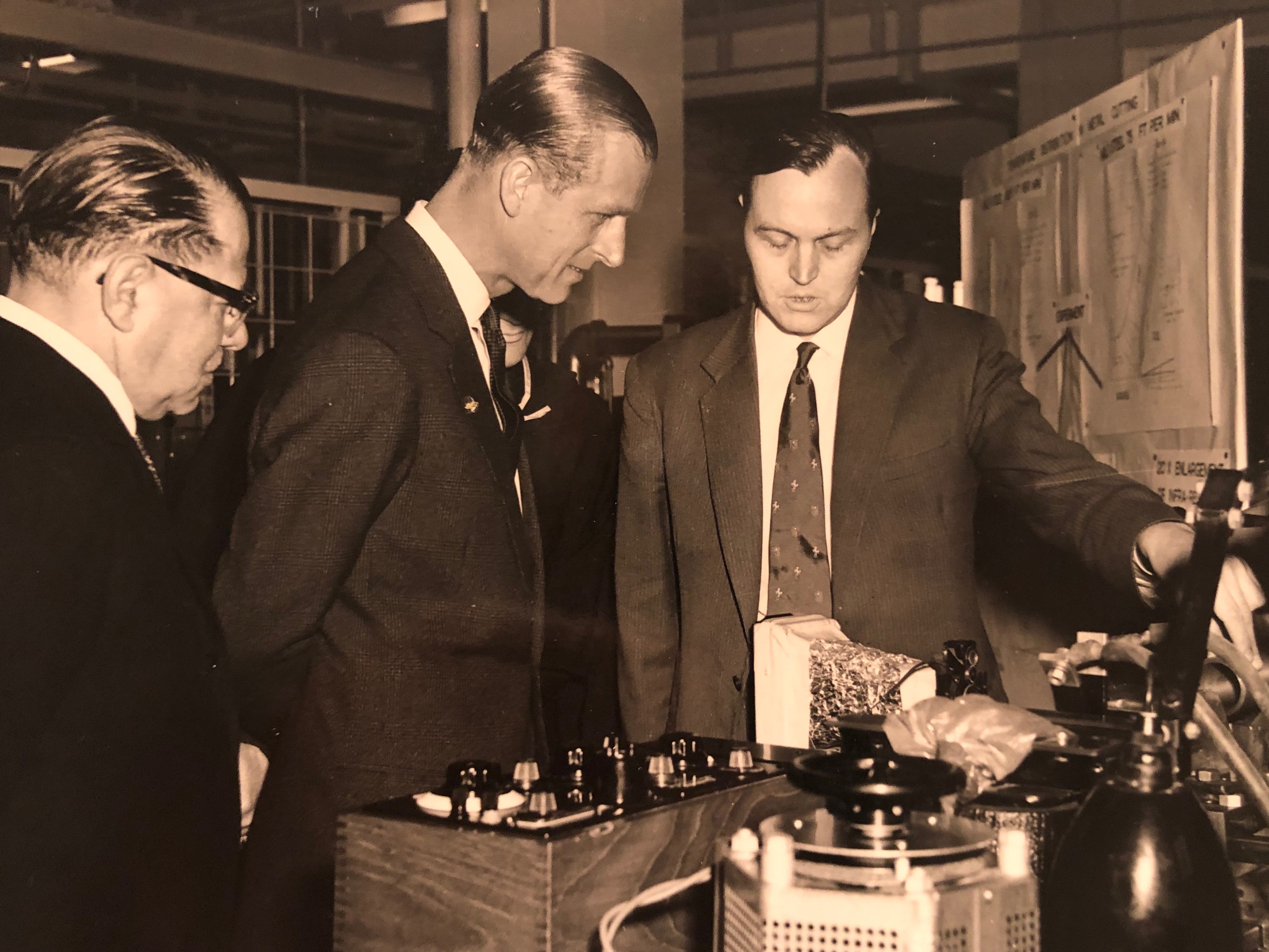
Geoffrey Boothroyd (1932–2024) was born in Radcliffe, Lancashire, England. He earned a BSc in Engineering (1956), a PhD (1962), and later a DSc (1974) from the University of London. In 1967, he joined the faculty at the University of Massachusetts Amherst, where his research on quantitative methods to estimate assembly time and reduce part counts laid the groundwork for Design for Assembly.
His studies demonstrated that reducing the number of parts—rather than merely simplifying them—was the key to lowering assembly labor and overall costs. Boothroyd's innovative work catalyzed a paradigm shift in design thinking that has influenced generations of engineers. He later moved to the University of Rhode Island, where he spent nearly three decades disseminating DFMA through teaching and industry collaborations.
Beyond his technical contributions, Boothroyd was a passionate educator and mentor. His commitment to sharing knowledge helped establish DFMA as a critical subject in engineering curricula worldwide. His frequently cited publications—including the landmark 1994 paper and the definitive textbook co-authored with Peter Dewhurst and Winston A. Knight—inspired both academia and industry to embrace a design philosophy that values simplicity and efficiency.
Honors & recognition: National Medal of Technology and Innovation (1991) • Elected to the National Academy of Engineering • M. Eugene Merchant Manufacturing Medal, ASME/SME (2001) • SME Fellow (1986) • SME Education Award (1979) • In 2021, SME named its Outstanding Young Manufacturing Engineer Award in his honor.
Peter Dewhurst

Peter Dewhurst, a graduate of the University of Manchester, provided the analytical and computational expertise needed to transform Boothroyd's insights into practical DFMA tools. Joining Boothroyd at the University of Massachusetts Amherst around 1980, Dewhurst co-developed the first DFMA software package and refined the methodology for commercial use. Their collaborative efforts have established DFMA as a cornerstone of modern manufacturing.
Dewhurst's work extended beyond software development to ensuring that DFMA principles were adaptable across various industries. His contributions paved the way for automated design evaluations, enabling engineers to quickly iterate and improve their designs. His legacy lives on through continuous innovation in DFMA tools and training programs.
1991 National Medal of Technology
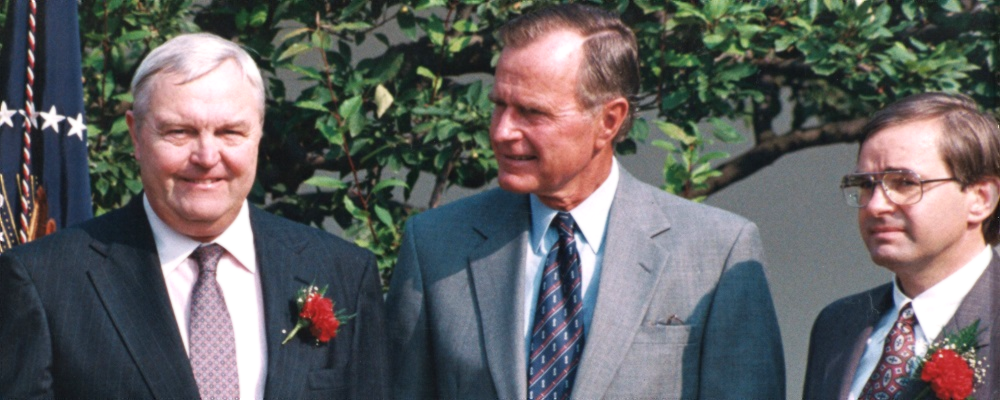
In 1991, Geoffrey Boothroyd and Peter Dewhurst were honored with the National Medal of Technology—the nation's highest honor for technological achievement. This prestigious award recognized their innovative work in developing and commercializing DFMA, a methodology that dramatically reduced manufacturing costs, improved product quality, and bolstered U.S. industrial competitiveness.
The recognition not only celebrated their past achievements but also encouraged further research and development, solidifying DFMA's role in the evolution of modern engineering.
Modern applications and future trends
As technology continues to advance, DFMA is evolving to meet the challenges of a digital and sustainable future. The integration of DFMA principles into computer-aided design, virtual reality simulations, and artificial intelligence has enabled engineers to optimize products with unprecedented precision.
Emerging trends such as additive manufacturing (3D printing) and robotics are now being examined through the DFMA lens. By analyzing designs for ease of production and assembly at every stage, companies are creating products that are not only more efficient to produce but also environmentally responsible. As industries worldwide shift toward smart manufacturing, DFMA remains a vital tool in reducing waste, lowering energy consumption, and enhancing product performance.
DFMA's enduring legacy
From its academic origins in the 1960s to its evolution into a global best practice, DFMA has transformed the way products are designed and manufactured. The visionary work of Geoffrey Boothroyd and Peter Dewhurst—celebrated with the 1991 National Medal of Technology—continues to influence modern engineering by driving advances that make products simpler, more reliable, and cost-effective.
As manufacturing embraces digital transformation and sustainable practices, DFMA remains at the forefront of innovation. Its enduring principles guide engineers in creating products that meet the demands of efficiency, quality, and environmental stewardship.
See DFMA in Action
Explore how teams apply DFMA Product Simplification and Should Costing to reduce costs, improve quality, and accelerate time to market.